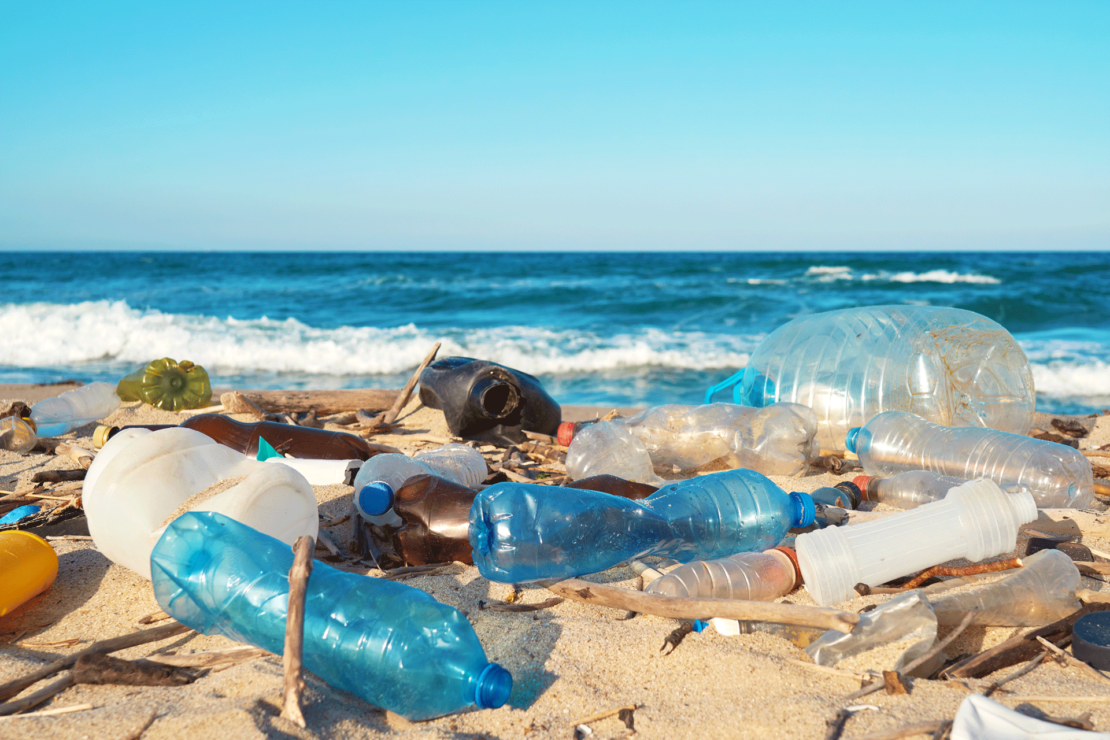
Plastic litter has found its way into nearly every type of environment—both on a large and small scale. Microplastics are entering the human body, cigarette butts are scattered along streets, and plastic waste can be encountered during wilderness hikes, in the mountains, and even on ocean cruises.
“It was the massive plastic garbage patches in the oceans that first made the world aware of the plastic pollution crisis,” says marine biologist Sanna Suikkanen, Senior researcher at the Finnish Environment Institute (Syke).
Accurate monitoring data on plastic pollution is only available from coastal areas, even though most plastic waste originates on land. According to WWF, more than 150 million tonnes (or 150 billion kilograms) of plastic are floating in the oceans—enough to fill over 6 million trucks. In comparison, Finland generates around 3 million tonnes of municipal waste annually.
Baltic Sea has the least beach litter
In Europe, marine litter has become a focal point for environmental monitoring, and the Marine Strategy Framework Directive requires EU member states to track the status of marine litter. The amount of coastal debris has been monitored on Baltic Sea shores for over a decade.
“The Baltic Sea is the least littered marine area in Europe, though plastic waste is still commonly found along its shores,” Suikkanen says. Tourism increases pollution in the Mediterranean and Black Seas, while fishing plays a larger role in the North Sea.
Plastic pollution is a global phenomenon, as lightweight, durable plastic debris travels easily by wind and water, far from where it was originally discarded.
“That’s why plastic waste can be found even on remote Finnish islands in the Baltic Sea or in inland nature reserves. And it can be decades old, since plastic breaks down very slowly in nature.”
In 2023, over 2 billion deposit-bearing beverage containers were returned in Finland: more than 1.4 billion cans, 662 million plastic bottles, and 125 million glass bottles. (Source: Palpa)
Plastic litter can be old, as it persists in nature for a very long time.”
What kinds of plastic waste are found on shores?
According to Suikkanen, countries like Finland, with efficient waste management and relatively small populations, experience less plastic pollution. Areas with larger populations tend to have more plastic waste.
“Where there are people, there is plastic. In many places around the world, waste is still dumped in open landfills, where it can easily spread into the environment and flow into rivers—and eventually the sea.”
Globally, cigarette butts and single-use items like plastic bottles are the most common plastic litter. In Finland, the most frequently found plastic litter in 2023–2024 included cigarette butts, plastic fragments, nicotine pouches, candy wrappers, and chip bags. Litter is monitored on 15 Baltic Sea beaches across the country.
“In 2024, the most plastic waste was found on urban beaches—about six times more than on natural beaches,” Suikkanen reports. The highest concentrations were found on shores of the Bothnian Bay and Archipelago Sea; the lowest on the Kvarken and Bothnian Sea. The variation reflects differences in beach types rather than geography.
“For example, urban beaches are monitored in the Bothnian Bay area, while more pristine beaches are studied in the Bothnian Sea.”
Beach litter reflects local industries and land use. Urban development and recreational use contribute to cigarette butts, nicotine pouches, candy wrappers, and fireworks debris.
“In contrast, litter on natural shores mainly arrives from the sea—mostly from fishing and maritime traffic,” Suikkanen explains.
Finland’s Top 10 litter items (2023–2024)
- Cigarette butts
- Unidentified plastic fragments
- Firework cardboard debris
- Nicotine and snus pouches
- Plastic candy wrappers and crisp bags
- Pieces of paper
- Processed wood
- Identifiable plastic objects
- Plastic construction waste
- Plastic bottle caps and lids
Limited knowledge on plastic in soil
The effects of plastic on freshwater and soil have been studied far less than in marine environments. In 2022, the Finnish Environment Institute and the Institute for Health and Welfare compiled(you are switching to another service) data on the harmful environmental and health effects of plastics.
“It’s estimated that up to 20 times more plastic ends up in soil than in water, due to proximity to human activity,” Suikkanen notes.
Plastic waste in soil quickly gets buried under vegetation, but its harmful impacts persist. It can alter soil properties and affect organisms essential to agriculture, such as earthworms.
“Plastic from silage bales can also be harmful to livestock if they accidentally ingest it.”
Stomachs full of plastic
Plastic pollution affects the health of various animals, including birds and fish. Suikkanen says that entanglement in plastic can prevent animals from moving, finding food, or hiding from predators.
“If plastic ends up in an animal’s digestive or respiratory system, it can choke or starve. A stomach full of plastic suppresses hunger signals.”
Plastic bags and similar items can also be dangerous to domestic animals. Additionally, plastics contain numerous harmful chemicals.
“For example, cigarette butts are the most common type of plastic litter globally, and all nicotine-containing products are toxic to dogs,” Suikkanen emphasizes.

Plastic also reaches soil through agricultural use, such as plastic mulches used on berry farms.
Large pieces of plastic, like tarps, can cover vast areas of seabed, killing plant life and depriving marine animals of oxygen.
“Some species may thrive by attaching themselves to plastics, and invasive species can travel with plastic debris. The overall impact of plastic on ecosystems can be unpredictable.”
Cigarette butts are the most common plastic litter item in the world by quantity.”
Plastic pollution threatens people and livelihoods
Plastic pollution isn’t just an environmental issue—it also has economic implications. Littered coastlines, islands, or mountain areas can hurt tourism. According to Suikkanen, plastic pollution increases cleanup costs for businesses and causes damage to boats and fishing vessels.
“Fishing and aquaculture also contribute to plastic waste. String-like plastic items such as fishing lines are among the most dangerous for animals, both on land and in water.”
In Finnish cities, plastic pollution is mainly an aesthetic problem, but litter can carry pathogens. This poses a health risk, especially in warmer regions with poor waste management.
“People may use polluted water for bathing or drinking. Burning plastic waste also significantly reduces air quality.”
Microplastics found throughout the human body
In addition to visible plastic waste, microplastics present another serious problem. These are particles smaller than 5 mm, with nanoplastics being less than 0.1 mm—too small to see with the naked eye.
“Wastewater treatment in Finland can filter out up to 99% of microplastics, but they still remain in sewage sludge, which may be spread on fields as fertilizer,” Suikkanen explains.
Top sources of microplastics include vehicle tires, industrial processes, and artificial turf. In households, microplastics come from cosmetics, hygiene products, outdoor paints, and laundry.
“It’s a sobering thought: we’re constantly adding new plastic into the environment even as the old plastics are still around. That’s why plastic pollution is growing,” Suikkanen says.
Plastics accumulate in the body more thoroughly the smaller the particles are. Studies have found plastics throughout the human body—from the brain and bloodstream to internal organs and bone marrow. While most plastic is naturally expelled through the digestive system, some research indicates microplastics may pose health risks. Chemicals in both micro- and macroplastics are similarly harmful.
In households, microplastics are found in products such as cosmetics and hygiene items.”
Legislation effects!
Suikkanen is cautiously optimistic about the future. Plastic research and legislation clearly make a difference. For example, the EU’s Single-Use Plastics Directive (SUP)(you are switching to another service) has already helped reduce certain types of plastic litter.
“Litter on Baltic Sea beaches has decreased by about 45%, and single-use plastic litter by about 30% since 2015.”
Plastic production is projected to triple by 2060, and WWF predicts marine plastic waste could quadruple in the next 25 years. However, there’s still hope. According to the UN Environment Programme (UNEP), plastic waste could be reduced globally by up to 80% over the next 15 years.
“Even if plastic production increases, the amount of litter doesn’t have to grow,” Suikkanen stresses.
This requires broad societal action—both in Finland and globally. We should reduce plastic use, eliminate unnecessary single-use items, and replace plastics with less harmful materials. Suikkanen also highlights the need for better enforcement.
“Construction sites release plastics into nature, especially styrofoam, which crumbles into tiny particles that are nearly impossible to remove.”
Although global plastic production is increasing, the amount of plastic litter doesn’t have to grow!”
What can individuals do to reduce plastic pollution?
One clear way to reduce plastic pollution is to avoid unnecessary single-use plastic products. Recycling should also be improved, as only about 30% of plastic packaging is recycled in Finland.
Careful sorting—at home and while traveling—can help protect both local and global environments.

“If someone throws a plastic bottle into a lake at their cottage on Lake Saimaa, it could float via the Vuoksi River to Lake Ladoga, and from there into the Neva River, eventually reaching the Gulf of Finland—and perhaps even the Southern Hemisphere,” Suikkanen describes.
Human activity should leave no unnecessary traces in nature.
“Nicotine pouches and chewing gum also contain plastic and shouldn’t be thrown into nature. Thankfully, people in Finland are very savvy about recycling. Attitudes have already changed significantly.”
Finland is working to reduce plastic pollution through its Plastics Roadmap for Finland(you are switching to another service), which aims to curb environmental littering and other negative impacts of plastic, reduce unnecessary consumption, and improve reuse and recycling .of plastics. Plastics made from fossil raw materials are being replaced with recycled or sustainably produced renewable materials.
More information

Sanna Suikkanen
Senior researcher, Finnish Environment Institute
firstname.lastname@syke.fi